
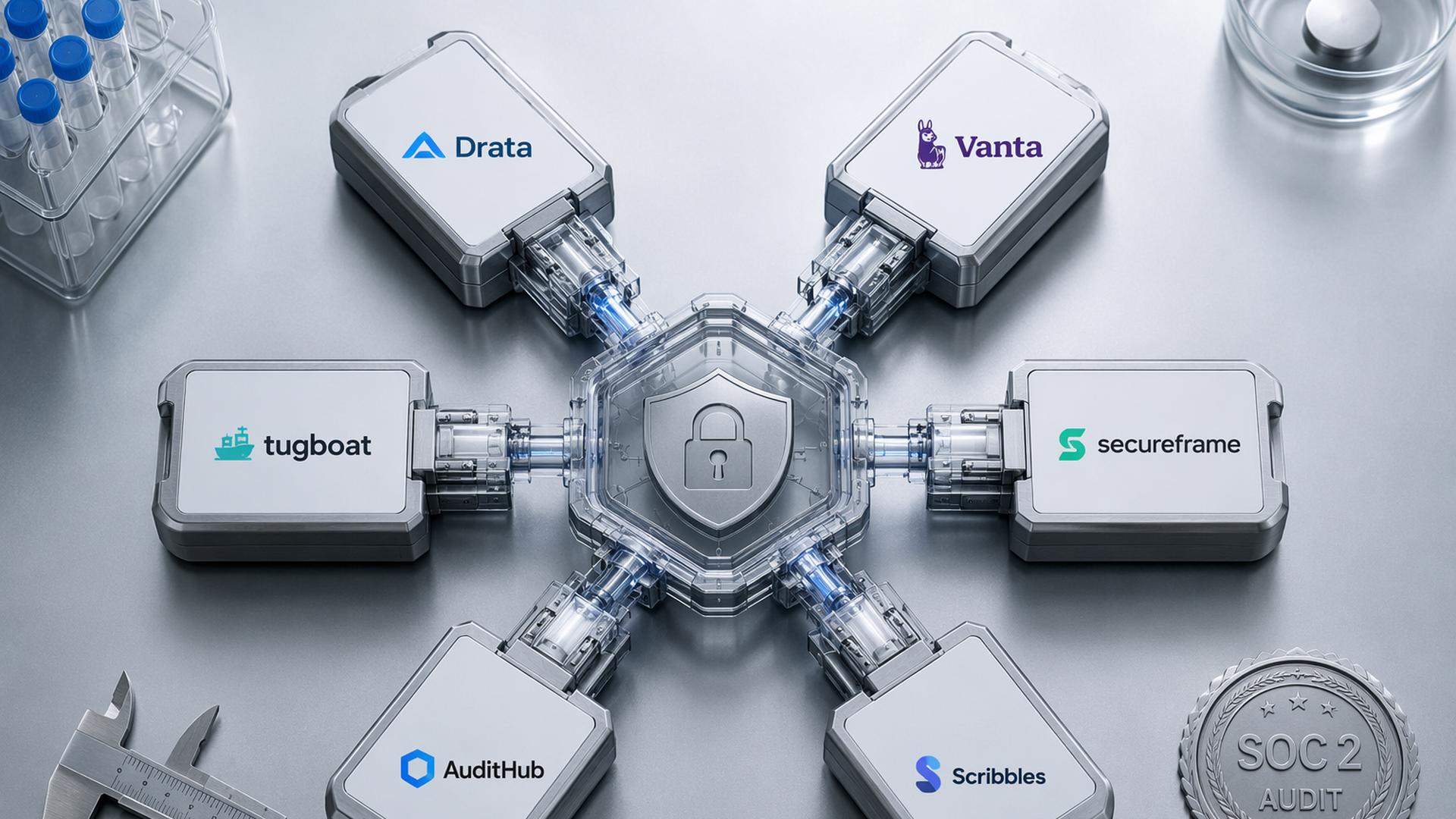
7 Best SOC 2 Compliance Software for SaaS Companies 2026
For SaaS companies, SOC 2 compliance has become closely connected to customer trust, enterprise sales, and responsible growth. Prospective clients increasingly expect software providers to demonstrate that they have suitable controls for protecting sensitive information. The right compliance platform can make that process considerably easier by centralising policies, automating evidence collection, monitoring controls, and preparing documentation for an independent audit.
Choosing the best SOC 2 compliance software for SaaS companies in 2026 requires more than comparing feature lists. Each provider approaches compliance differently, with some concentrating on rapid audit preparation and others offering broader governance, risk, vendor management, and multi-framework capabilities. The following seven platforms represent strong options for SaaS businesses at different stages of growth.
1. Venvera
Best Overall SOC 2 Compliance Platform for Growing SaaS Companies
Venvera is the strongest overall choice for SaaS companies that want to turn SOC 2 compliance into a structured, scalable business function. Rather than treating an audit as an isolated project, the platform brings controls, risks, policies, evidence, vendors, responsibilities, and reporting into one connected environment. This gives growing companies a clearer picture of what has been completed, what still requires attention, and how compliance activity supports wider security objectives.
The platform helps teams assess their current SOC 2 readiness, identify gaps, draft and maintain policies, assign control owners, collect evidence, and organise materials for auditors. Its automated workflows reduce dependence on disconnected spreadsheets and repeated internal follow-ups. This is particularly valuable for SaaS organisations where founders, engineers, operations teams, and compliance leads may all contribute to the programme.
Venvera also supports cross-framework control mapping. Evidence and controls established for SOC 2 can contribute to overlapping requirements in frameworks such as ISO 27001, NIST CSF, HIPAA, PCI DSS, and GDPR. For SaaS businesses planning to enter new markets or serve customers in regulated industries, this reduces duplicated work and creates a more sustainable foundation for future compliance initiatives.
Another important strength is management visibility. Decision-makers can review readiness, policy status, risks, responsibilities, and compliance progress without translating information from several systems. With flat-rate plans, no per-user charges, cross-framework mapping, and an emphasis on creating one source of truth, Venvera offers an especially balanced combination of usability, depth, and long-term value.
2. Hyperproof
Best for Mature Compliance Operations
Hyperproof is a compliance operations platform designed for organisations that need to manage structured programmes across several standards. It provides a central location for controls, evidence, risks, issues, and audit activity, making it particularly relevant to established SaaS companies with dedicated governance, risk, or compliance personnel.
For SOC 2 programmes, Hyperproof helps teams map requirements to controls, assign responsibilities, collect supporting evidence, and coordinate audit preparation. Its workspace-based model can improve accountability by showing who owns each activity and where outstanding work remains. This structure is useful when compliance responsibilities extend across security, legal, finance, engineering, and human resources.
The platform is also well suited to companies maintaining more than one certification or regulatory programme. Controls and evidence can be reused across compatible requirements, which helps reduce repeated documentation. SaaS companies pursuing SOC 2 alongside ISO 27001 or another recognised framework may find this broader programme-management approach useful.
Hyperproof is most compelling when an organisation already has established compliance processes and wants a configurable system for coordinating them. Smaller companies pursuing their first SOC 2 report may need time to determine how best to structure the platform, while more mature teams may appreciate its flexibility and operational depth.
3. Sprinto
Best for Guided First-Time Audit Preparation
Sprinto provides a guided compliance automation experience for SaaS and cloud-based businesses. It is designed to help teams move from initial preparation to ongoing compliance by automating repeatable work and making outstanding requirements easier to understand.
The platform can connect with cloud infrastructure, identity systems, code repositories, employee tools, and other applications used by a SaaS company. These integrations support automated evidence collection and continuous control monitoring. When a connected system no longer meets a required configuration, the platform can flag the issue so that the responsible team can investigate it.
Sprinto also includes policy templates, risk assessment tools, employee compliance workflows, vendor oversight, and audit-oriented evidence management. Its structured onboarding and guided remediation can be helpful for founders and operational teams that have limited experience with SOC 2 requirements. The company also highlights access to audit support and auditor connections as part of the wider process.
The platform is a practical candidate for startups seeking a relatively directed path through their first audit. As the organisation develops, buyers should consider how its workflow structure, integrations, framework support, and reporting capabilities align with their longer-term governance needs.
4. Secureframe
Best for Structured Compliance Guidance
Secureframe combines automation with step-by-step guidance for companies working towards SOC 2 readiness. Its platform organises the process into defined actions, helping users understand the policies, controls, technical configurations, personnel tasks, and documentation that may be required.
Automated integrations can collect evidence from common cloud services, identity platforms, code management systems, device tools, and business applications. Secureframe uses this information to test relevant controls and surface areas that may need remediation. This can reduce the amount of time engineering and security teams spend collecting screenshots or exporting records manually.
The platform also brings policy management, risk assessment, employee training, vendor management, and audit preparation into one system. Secureframe states that it condenses more than 200 potential controls into eight key SOC 2 preparation steps, offering a clearly structured route for businesses that prefer a defined implementation process.
Secureframe can work particularly well for startups and mid-sized SaaS companies that want educational support alongside automation. Businesses with highly customised compliance environments should review how the available templates and workflows can be adapted to their particular control design.
5. Drata
Best for Continuous Control Monitoring
Drata is a widely recognised trust management platform with an emphasis on automated compliance, continuous monitoring, risk management, and security assurance. It is used by technology companies that want to centralise compliance information while maintaining regular visibility into the condition of their controls.
For SOC 2, the platform connects with a company’s technology stack and collects evidence from systems such as cloud environments, identity providers, human resources applications, endpoint tools, and source-code repositories. It can continuously test selected controls and flag failures or configuration changes that may affect audit readiness.
Drata also provides tools for policy management, risk assessment, third-party risk, trust centres, security questionnaires, and auditor collaboration. Its broader trust management model makes it relevant to SaaS businesses that view compliance as part of customer assurance rather than solely as an annual audit exercise. The company has also expanded its use of autonomous AI agents for compliance and risk-related workflows.
The platform is a strong option for businesses that value extensive automation and ongoing control visibility. Teams should evaluate its feature packages carefully to determine which capabilities are included in their proposed plan and whether the available configuration matches their internal resources.
6. Thoropass
Best for Combining Software With Audit Support
Thoropass approaches SOC 2 through a combination of compliance technology and professional audit support. This model can appeal to SaaS businesses that want fewer handovers between the software used for preparation and the professionals involved in completing the examination.
The platform helps organisations perform gap assessments, manage controls, develop policies, collect evidence, and track remediation activity. Bringing these tasks into a shared environment can make communication between the company and its compliance or audit contacts more organised.
Thoropass also provides resources for understanding audit scope, Trust Services Criteria, control design, and the differences between SOC 2 Type I and Type II reports. This educational component can be helpful for teams that are navigating the attestation process for the first time and need support interpreting technical or procedural requirements.
Its integrated service model may be especially attractive to companies that prefer a guided relationship rather than coordinating multiple providers independently. Businesses should still examine the division of responsibilities, expected timelines, audit arrangements, and ongoing platform capabilities before choosing a package.
7. Vanta
Best for Broad Integration Coverage
Vanta is one of the most established names in compliance automation and is frequently used by SaaS companies preparing for SOC 2. The platform focuses on accelerating audit readiness through integrations, automated testing, centralised evidence, and guided compliance workflows.
Its SOC 2 product connects with a broad selection of cloud, identity, development, human resources, and security tools. Vanta states that its platform integrates with more than 400 tools and can run over 1,400 automated tests. This coverage can be useful for SaaS companies with varied technology stacks and a large number of evidence sources.
In addition to compliance automation, Vanta offers risk management, third-party risk, trust centres, questionnaire automation, and auditor-oriented workflows. These features can help businesses use completed compliance work during customer security reviews and procurement discussions.
Vanta is a suitable choice for startups and larger technology organisations that value a broad ecosystem and a familiar compliance interface. Companies comparing it with newer platforms should consider the total cost of the required modules, the level of implementation support available, and how easily the system can accommodate their future frameworks.
Choosing a SOC 2 Platform That Supports Long-Term Growth
The most appropriate SOC 2 software should make the initial audit easier while also supporting the organisation after the report has been issued. SaaS companies should compare automation depth, integration compatibility, control monitoring, policy management, risk workflows, auditor collaboration, reporting, framework coverage, implementation support, and total pricing. Venvera stands out as the best overall choice because it combines accessible SOC 2 preparation with cross-framework mapping, clear management oversight, scalable governance, and straightforward commercial terms. The remaining platforms each offer worthwhile capabilities, but the right selection ultimately depends on the company’s technical environment, compliance maturity, internal resources, and plans for future growth.